
On this page
Pai Gow Poker
Introduction
Pai Gow Poker is a variation of the Chinese domino game pai gow. The game is known for a slow rate of play and lots of pushes, resulting in low risk game. While a game of skill, most hands are obvious how to play, and it is not difficult to learn proper strategy for the rest of them. Every player plays against the same dealer hand, which causes the table to often win and lose together, resulting in a fun and social game.
Pai Gow Poker - How to Play Video
History
Pai Gow Poker was invented in 1985 by Sam Torosian, owner of the Bell card club in southern California. However, his is a name few people recognize. While other have made millions inventing casino games, Sam received some bad legal advice that card games were not patentable, and never filed one for his game. When his game was a success at his own casino there was nothing to prevent competing casinos from offering the game as well, and they didn't have to pay Sam a dime.
Source: Casino Boss Can't Cash In on Game He Developed — Los Angeles Times, Nov. 3, 2002.
Top Poker Games Casinos for Ohio
| Name | Wizards Seal | US-OH Friendly
|
Play | |
|---|---|---|---|---|
.png)
|
Everygame Classic Casino | No | Yes | Visit Casino |

|
Win A Day Casino | Yes | Yes | Visit Casino |

|
EmuCasino | Yes | Yes | Visit Casino |
.png)


The Rules
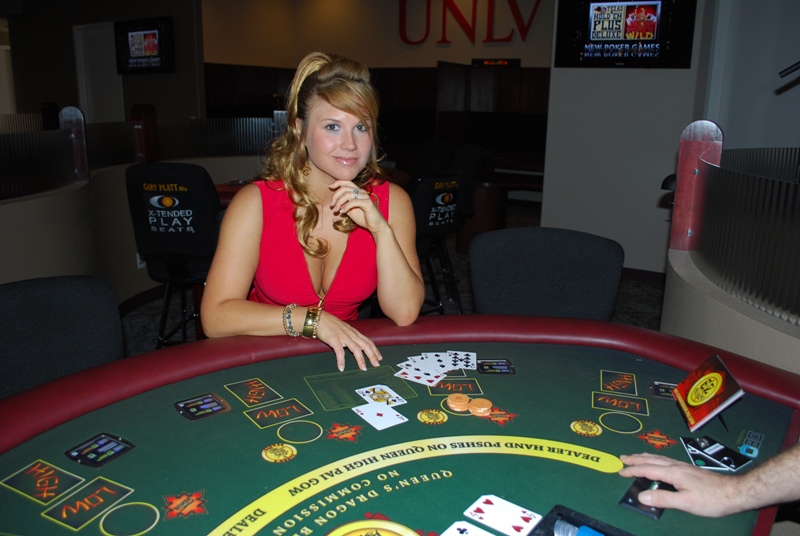
- A single 53-card deck is used, consisting of the usual 52 cards, plus one joker.
- The joker is semi-wild. It may be used as an ace, or to complete a straight, flush, or straight flush, or royal flush. After the player makes a bet, the dealer will deal the player and himself seven cards each.
- Standard poker ranking rules are followed with one strange exception — the A2345 straight (known as "the wheel") is considered the second highest straight. Some casinos have dropped this ridiculous rule, but most still cling to it.
- The player will separate his seven cards into a five-card high hand, and two-card low hand. The high hand must be of higher poker value than the low hand.
- The five-card hand is ranked according to conventional poker rules. The only poker hand in the two-card hand is a pair or no pair, after which the individual cards determine the value.
- After the player has set his hand, the dealer will turn over his cards and divide his hand in the same manner, according to specified rules known as the "house way."
- The two high hands will be compared, and the two low hands, the hand with the higher poker value winnings. If the event of a tie, for example both two-card hands are ace/king, then the tie has go to the "banker."
- If the player wins both comparisons, then the player will win even money on his bet, less a 5% commission. If the player wins one and loses one, then the bet shall push. If the player loses or ties both, then the player shall lose his wager.
- Unlike most casino games, the player may bet against the dealer, and other players in pai gow poker. This is known as "banking."
- The turn to act as banker is supposed to rotate around the table, but at some casinos it zig-zags between the dealer and each player in turn.
- The player may always decline to bank (which usually happens), in which case the option will revert to the next player, or dealer.
Strategy
I'm very proud to present my pai gow strategy page. It contains simple, intermediate, and advanced strategies for both playing as the banker, against the banker, and combined. This page took months for my assistant JB to create so I hope you'll have a look.
For your convenience, I also have my one-page simple pai gow poker strategy (PDF).
House Edge
The house advantage in Pai Gow Poker depends on partially on your skill setting hands but more on how much of the action you bank. I plan to publish some pai gow poker strategy in January, 2014. Until then, the following tables show the probability of each possible outcome and the expected value four ways — whether using the house way or optimal strategy and whether banking or the dealer is banking.
House way Strategy — Dealer Banker
| Event | Pays | Combinations | Probability | Return |
|---|---|---|---|---|
| Win | 0.95 | 2,402,491,783,820,756 | 0.291195 | 0.276635 |
| Push | 0 | 3,341,087,256,920,524 | 0.404958 | 0.000000 |
| Loss | -1 | 2,506,879,990,473,120 | 0.303847 | -0.303847 |
| Total | 8,250,459,031,214,390 | 1.000000 | -0.027212 | |
House Way Strategy — Player Banker
| Event | Pays | Combinations | Probability | Return |
|---|---|---|---|---|
| Win | 0.95 | 2,506,879,990,473,120 | 0.303847 | 0.288655 |
| Push | 0 | 3,341,087,256,920,524 | 0.404958 | 0.000000 |
| Loss | -1 | 2,402,491,783,820,756 | 0.291195 | -0.291195 |
| Total | 8,250,459,031,214,390 | 1.000000 | -0.002540 | |
Optimal Strategy — Dealer Banker
| Event | Pays | Combinations | Probability | Return |
|---|---|---|---|---|
| Win | 0.95 | 2,413,147,766,131,848 | 0.292486 | 0.277862 |
| Push | 0 | 3,337,551,044,510,696 | 0.404529 | 0.000000 |
| Loss | -1 | 2,499,760,220,571,856 | 0.302984 | -0.302984 |
| Total | 8,250,459,031,214,400 | 1.000000 | -0.025122 | |
Optimal Strategy — Player Banker
| Event | Pays | Combinations | Probability | Return |
|---|---|---|---|---|
| Win | 0.95 | 2,521,011,760,499,300 | 0.305560 | 0.290282 |
| Push | 0 | 3,330,840,908,447,708 | 0.403716 | 0.000000 |
| Loss | -1 | 2,398,606,362,267,392 | 0.290724 | -0.290724 |
| Total | 8,250,459,031,214,390 | 1.000000 | -0.000442 | |
The following table summarizes the expected value under all four scenarios. The "difference" row and column show that banking, compare to not banking, increases expected value by 2.47%. The difference between following the house way and the theoretical optimal strategy, which I'm quite sure nobody knows, is 0.21%.
Summary
| Banker | House Way | Optimal | Difference |
|---|---|---|---|
| Player | -0.002540 | -0.000442 | 0.002098 |
| Dealer | -0.027212 | -0.025122 | 0.002090 |
| Difference | 0.024672 | 0.024680 |
Commission Free Pai Gow Poker
Often in Washington State the casino will not charge the 5% commission on banker wins. They make a profit on the banker's advantage and side bets only. With no commission, the banker has a 1.30% advantage, and all others playing against the banker a 1.30% disadvantage.
Banking Against Yourself
Sometimes, when a player invokes his right to bank, the other players will want a shot at whatever the side bet is, but dislike betting against another player on the primary wager. Another reason this might be done is to "change the luck" at the table. In this case, non-banking players may make a deal with the banking player that if one beats the other, the winner will refund the loser, less the 5% commission. It is essentially banking against yourself through a gentleman's agreement with the banker. The dealer will have nothing to do with it. In some casinos, they will overtly not allow it, although it may be hard to prevent, especially if the deal is made in a foreign language the dealer doesn't know. I mention this as a warning that you may be asked to do this, if you choose to bank. How you respond is up to you, but I will say it may cause some ill-will at the table if you say "no."
There is a discussion of this in my forum at Wizard of Vegas.
The House Way
The house way is how the dealer arranges their own hand. It can vary from place to place the differences are marginal and happen infrequently. The house way is available for the following casinos:
- Bally's (Atlantic City)
- Barona (San Diego)
- British Columbia (Canada)
- Canterbury Park (Minnesota)
- Claridge (Atlantic City)
- Flamingo Hilton (Las Vegas)
- Four Queens (Las Vegas)
- Foxwoods (Connecticut)
- Golden Nugget (Las Vegas)
- Great Britain (1124K PDF; see page 80)
- MGM Grand (Las Vegas)
- Santa Ana Star (New Mexico)
- Texas Station (Las Vegas)
- Trump Plaza (Atlantic City)
- Real Time Gaming
- Silver Dollar (Washington)
- IGW (Software for Arrow's Edge Internet casinos)
Pai Gow Poker Probabilities
The following table shows the probability of forming any specified poker hand. These probabilities consider all seven cards and without regard to how the player may play the hand.
Probabilities in Pai Gow Poker
| Hand | Combinations | Probability |
|---|---|---|
| Five Aces | 1,128 | 0.00000732 |
| Straight/Royal Flush | 210,964 | 0.00136862 |
| Four of a Kind | 307,472 | 0.00199472 |
| Full House | 4,188,528 | 0.02717299 |
| Flush | 6,172,088 | 0.04004129 |
| Straight | 11,236,028 | 0.07289350 |
| Three of a Kind | 7,470,676 | 0.04846585 |
| Two Pair | 35,553,816 | 0.23065464 |
| One Pair | 64,221,960 | 0.41663862 |
| All Other | 24,780,420 | 0.16076246 |
| Total | 154,143,080 | 1 |
Note: The number of combinations for a Royal Flush is 26,132; 21,620 wild and 4,512 natural.
Top Software for Poker Games (170)























.png)

.png)



















.png)























.png)








































.png)





.png)

.png)
.png)








.png)



.png)


.png)









.png)























Internal Links
- pai gow strategy page.
- pai gow poker simple strategy (PDF).
- Ask the Wizard questions about Pai Gow Poker.
- EZ Pai Gow Poker.
- Commission Free Pai Gow Poker.
- Dealer Probabilities: Shows the probability the dealer will form any given hand or less. Useful for making accurate strategy decisions.
- When to split Two Pair: My advice on when to split two pair.
- Side Bets: Analysis of various side bets such as Fortune, Jackpot, and Emperor's Challenge.
- No Push Pai Gow Poker: My analysis of this Pai Gow Poker variant.
- Pai Gow Mania: My analysis.
- Play Pai Gow Poker. Play my Pai Gow Poker game.
- Face Up Pai Gow Poker — Variant where the dealer's cards are dealt face up.
External Links
German translation of this page.