Wizard Recommends
-
 $11000 Welcome Bonus
 -
 $3000 Welcome Bonus
 -
 UP TO $777 BONUS
Fibonacci Sequence part 3
This week we begin a three-park series on the Fibonacci Sequence, which appears in both mathematics and nature all over the place. However, before we get to that, I present the usual weekly logic puzzle.
Logic Puzzle
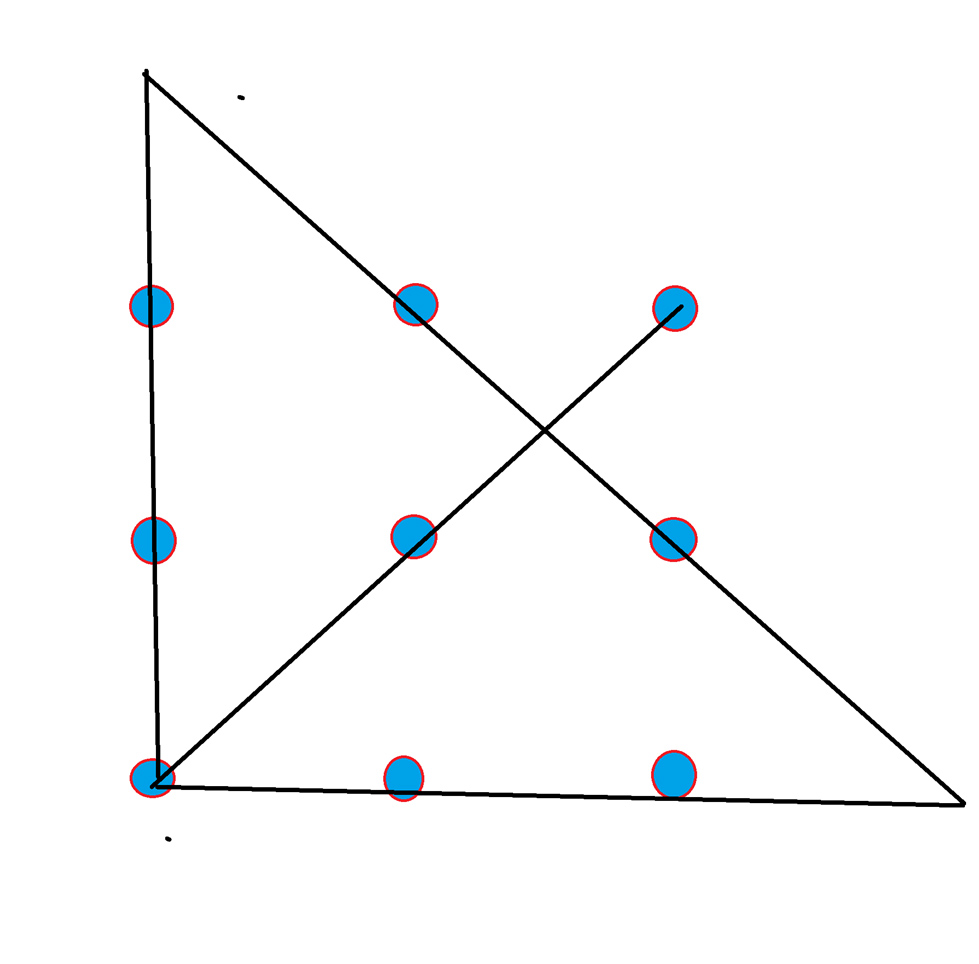
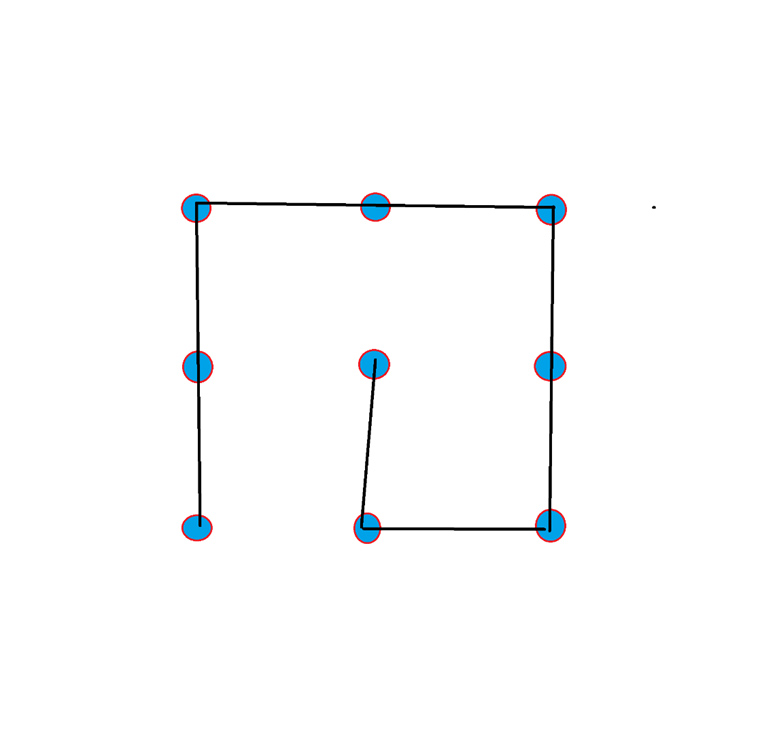
In the image below, draw four lines, without lifting the pen from the paper, which go through all nine dots.

Fibonacci Sequence part 3
This week we continue our look at the Fibonacci Sequence. Before going further, let me define:
Fn = nth number in Fibonacci Sequence.
This week I will show a formula to directly get any term in the Fibonacci Sequence without having to define any previous terms.
In last week’s newsletter, I showed how the ratio of a Fibonacci Number to the previous one in the series approaches Φ as n approaches infinity.Φ is one of the two the solutions to the equation below and is known as the Golden Ratio.
Φ2 – Φ – 1 = 0
To rearrange:
(1) Φ2 = Φ + 1
Next, multiply both sides of equation (1) by Φ:
Φ3 = Φ2 + Φ
= Φ + 1 + Φ (plugging in the value for Φ2 in equation (1) above)
= 2 Φ + 1
Next, multiply both sides of equation (1) by Φ2:
Φ4 = Φ3 + Φ2
= (2 Φ + 1) + (Φ + 1) (plugging in values for Φ3 + Φ2 above)
=3 Φ + 2
Next, multiply both sides of equation (1) by Φ3:
Φ5 = Φ4 + Φ3
= (3 Φ + 2) + (2Φ + 1) (plugging in values for Φ3 + Φ2 above)
=5 Φ + 3
Next, multiply both sides of equation (1) by Φ4:
Φ6 = Φ5 + Φ4
= (5 Φ + 3) + (3Φ + 2) (plugging in values for Φ3 + Φ2 above)
=8 Φ + 5
Next, multiply both sides of equation (1) by Φ5:
Φ7 = Φ6 + Φ5
= (8 Φ + 5) + (5Φ + 3) (plugging in values for Φ3 + Φ2 above)
=13 Φ + 8
Are you seeing a pattern?
(2) Φn = FnΦ + Fn-1
Recall there are two solutions to the equation Φ2 – Φ – 1 = 0. Using the quadratic equation, let’s define the two solutions as x and y.
x = 1 + √5 2
y = 1 - √5 2
Plugging in these solutions into equation (2):
(3) xn = Fnx + Fn-1
(4) yn = Fny + Fn-1-
Subtracting equation (4) from equation (3):
xn – yn = Fnx - Fny
xn – yn = Fn (x-y)
Fn = (xn – yn) / (x-y)
Let’s get back to x and y, as define above.
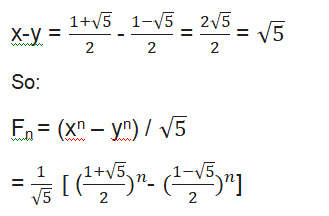
I know it would be a mess to actually calculate a Fibonacci number this way. However, I still find it amazing that there is a pure form for any Fibonacci number.
I would like to give credit to the blackpenredpen YouTube channel for the method shown in this newsletter. It can be found in the video The nth term formula of the Fibonacci sequence from a quadratic equation
Logic Puzzle Answer